

There is a word we love to teach every guest on their first morning here. In Kichwa, the language the Otavaleño people have spoken in these valleys for centuries, a hummingbird is a quinde. Say it once and it stays with you, and within an hour you will be pointing at the feeders and whispering it like a local. That small moment is what birding at Hacienda Primavera is really about. It is not only a list of species. It is a way of seeing the forest the way the families who have always lived here see it, as something alive and generous.
Why the Andean Chocó holds so many birds
Our home sits inside the Andean Chocó, a green fold of the western Andes that many travellers have never heard of, even though it is one of the richest places for birds on the planet. Ecuador is a small country, roughly the size of the state of Colorado, yet it holds more than 1,600 species of birds. A good share of them live in or pass through the cool, misty band of cloud forest where our lodge stands. Warm air rises off the Pacific, meets the mountains and turns to permanent cloud. That cloud feeds an endless bloom of flowers and fruit, and where there is food, there are birds.
The birds you came to see
Every visitor arrives with a wish, whether they are a serious lister with a worn notebook or a first timer who simply wants to see something bright. These are the ones that steal the show in our corner of the forest:
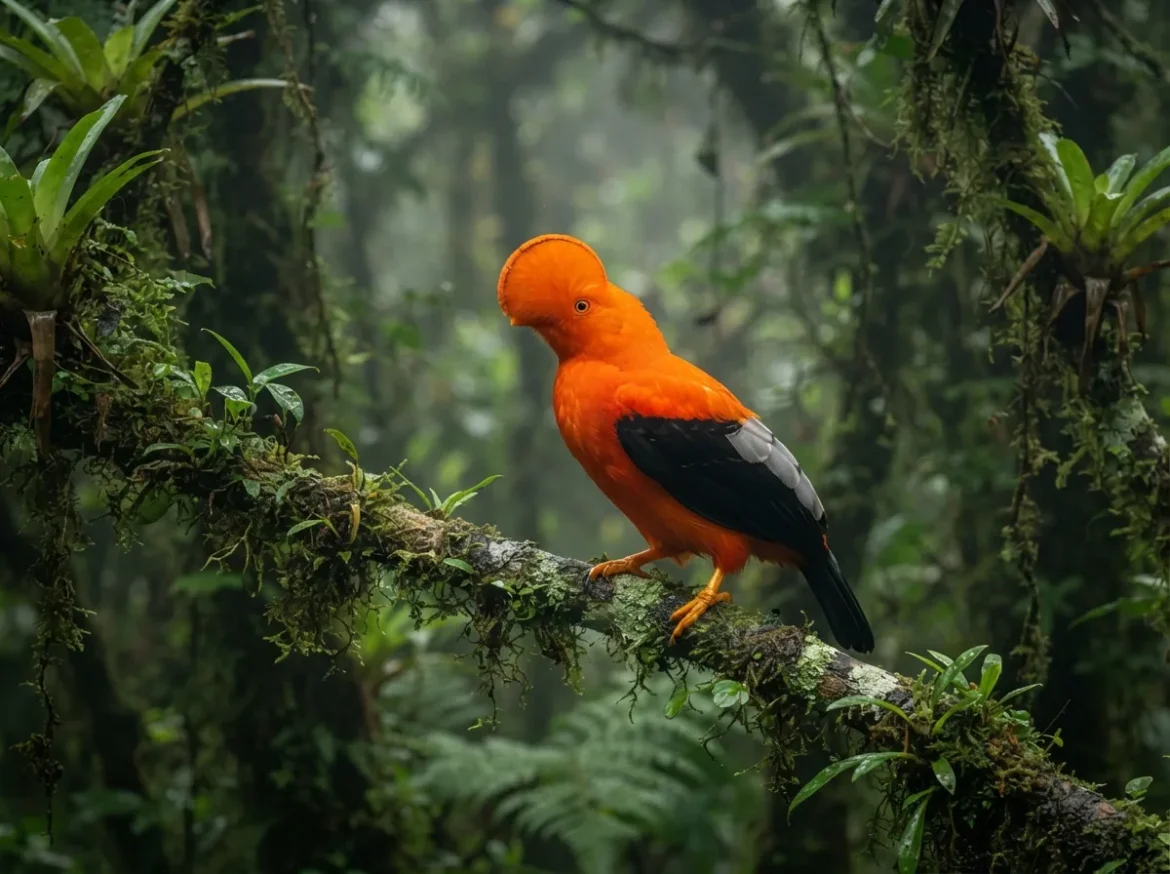
- The Andean cock of the rock, a bird the colour of live coals. The males gather before dawn to display together in what birders call a lek, and local people have known these noisy courts in the ravines for generations. It is a sight you never forget.
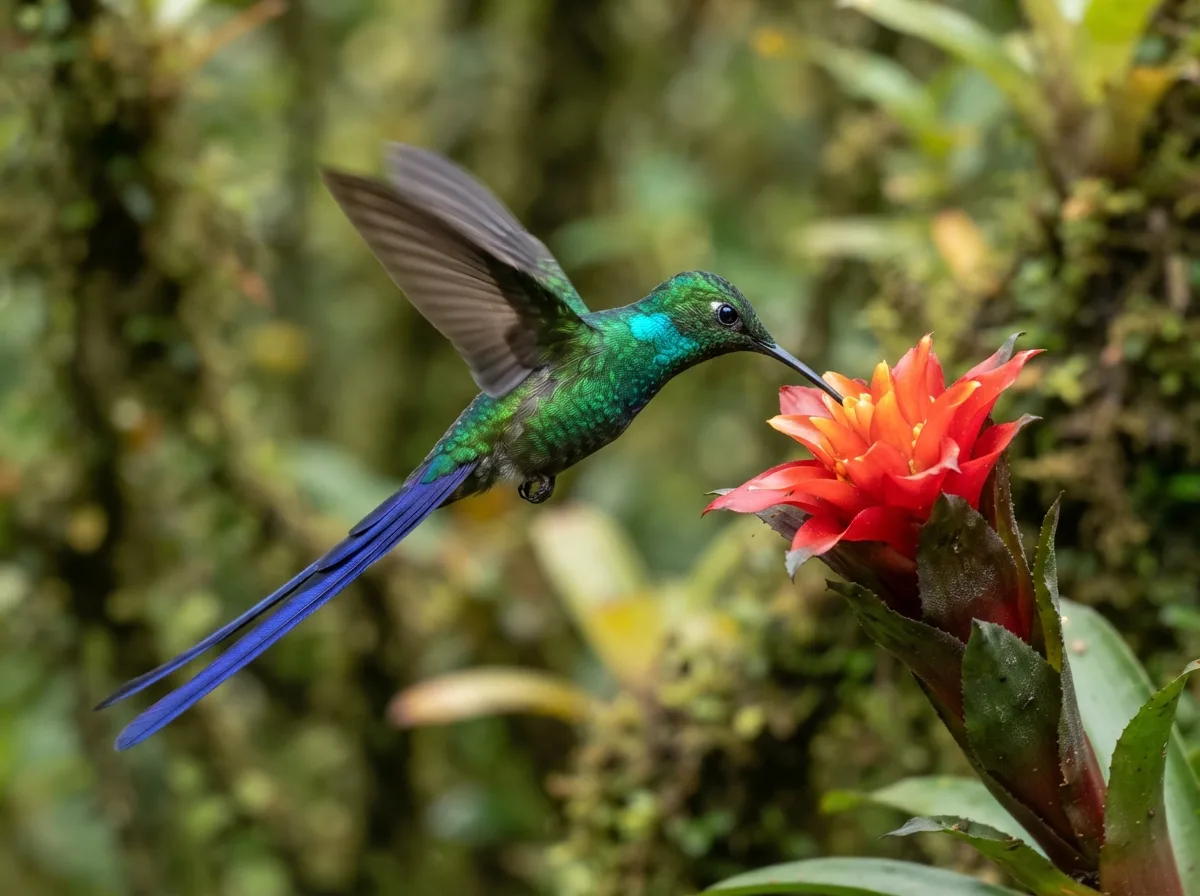
- The violet tailed sylph, a hummingbird whose tail streams far longer than its body in shining blue and green. It is nearly endemic to the Chocó, which means it lives almost nowhere else on Earth, and it visits our feeders freely.
- The plate billed mountain toucan, a high mountain toucan with a soft, painted bill, found only in the humid forests of Ecuador and Colombia.
- The flame faced tanager, one of dozens of tanagers that travel in mixed flocks and can turn a single fruiting tree into a moving stained glass window.
- And for the truly lucky, the toucan barbet, the golden headed quetzal and the club winged manakin, a little bird that actually sings with its wings.
Learning the forest, one name at a time
A word in Kichwa. Quinde means hummingbird. In the old stories the quinde is a messenger, small but brave, carrying news between the mountains and the flowers.
For the Kichwa families of Imbabura, the forest was never only scenery. Pachamama, Mother Earth, is spoken of as a living relative, and the birds are part of that family. When our guides walk you into the trees at first light, they share far more than names in English and Latin. They tell you which flower the quinde prefers, which call belongs to which bird, and how their grandparents read the seasons by who was singing. Learning these things is part of the joy. You leave not only with photographs but with a little of the knowledge that has been handed down here for a very long time.
How to see them, even if you are new to this
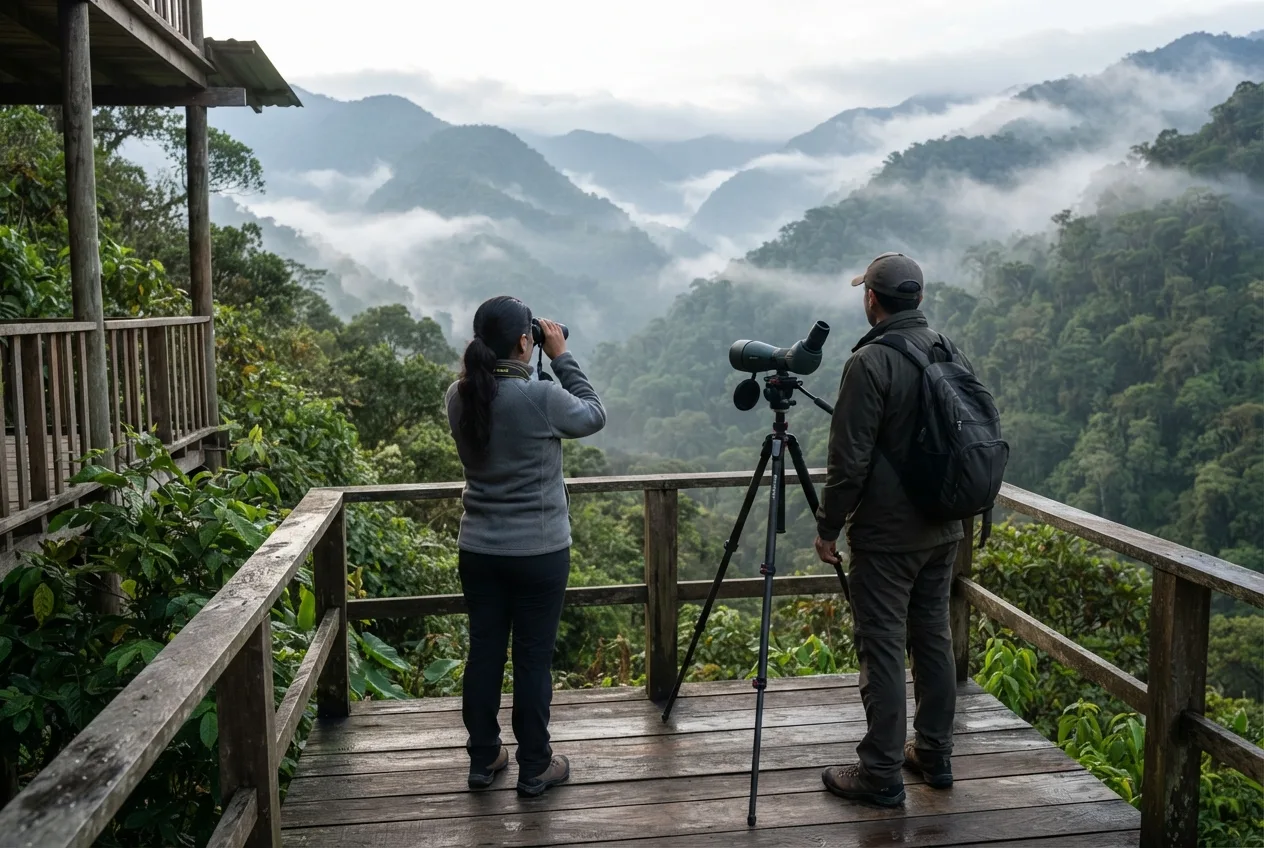
You do not need to be an expert or to own expensive gear. A great deal of the best birding happens right from our decks and gardens, where feeders and flowering shrubs pull the quinde and the tanagers in close enough to photograph with a phone. For the shy headline species, an early morning walk with one of our guides is the single best thing you can do, because birds are busiest and loudest just after dawn. We match the pace to you, whether that means a gentle stroll with coffee in hand or a patient morning waiting quietly at a lek.
If birding is the heart of your trip, let it set the rhythm of your days. You can see the full picture of feeders, trails and the best months to visit on our birdwatching experience page. Pair a dawn on the deck with an afternoon out in the wider Ecuador Andes getaway, or simply settle into our wilderness ecolodge and let the forest come to you.
Come and meet the quinde
Mornings here begin with birdsong and a cup of Ecuadorian coffee on the deck. Alli puncha, we will say, which is good morning in Kichwa. Reserve your room and we will have the feeders full and the trails waiting.
 EN
EN  ES
ES